

5 Best Cuts of Steak Explained (And How to Cook Each One)
Cooking steak at home is easier when you choose the right cut and cook to temperature. This guide breaks down five popular steak cuts, the best method for each, and a simple doneness chart you can reference while grilling or pan-searing.
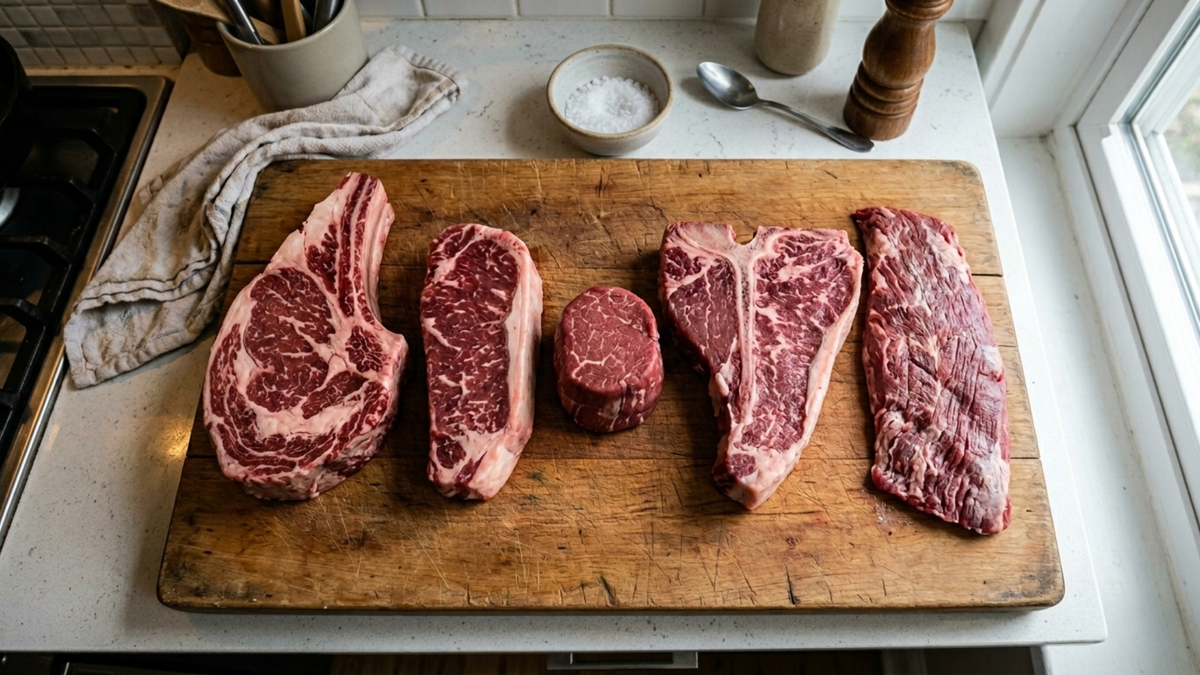
Cooking steak at home sounds simple, yet many home cooks end up disappointed. Often the problem is not the cooking itself. It is choosing the wrong cut for the method or treating every steak the same.

Ribeye, strip steak, filet mignon, flank steak, and porterhouse all behave differently when exposed to heat. Understanding how each cut cooks helps you get better results whether you are grilling outdoors or using a cast iron pan.
With National Steak Day approaching and spring grilling season starting, this guide explains five popular steak cuts and the best way to cook each one.
Table of Contents
Understanding Steak Cuts
The main differences between steak cuts come down to fat, muscle use, and thickness. These determine flavor, tenderness, and how forgiving the steak will be on the grill or in a pan.
Quick Tip
A ribeye cooks differently than a filet because it contains more fat. Leaner cuts need more precise temperature control to avoid drying out.
The 5 Best Steak Cuts
Use this section as your quick reference when shopping and cooking. Each cut has an ideal method and a simple target to aim for.
Ribeye
Best for: Flavor and juiciness
Ribeye is heavily marbled, making it one of the richest and most forgiving steaks.
Best cooking methods:
- High heat grilling
- Cast iron searing
Seasoning Tip
Keep it simple. Salt and pepper only. Salt 40 minutes before cooking or right before it hits the grill.
New York Strip
Best for: Balanced flavor and texture
Strip steak has less fat than ribeye but still offers strong beef flavor.
Best cooking methods:
- Direct grilling
- Pan searing
Seasoning Tip
Salt and pepper work best. Avoid heavy marinades that overpower the beef flavor.
Filet Mignon
Best for: Tenderness
Filet mignon comes from the tenderloin and is extremely tender but lean.
Best cooking method:
- Pan sear, then finish in oven
Seasoning Tip
Salt generously. Add butter, garlic, or herbs during cooking for extra flavor.
T-Bone / Porterhouse
Best for: Two steaks in one
These cuts combine strip steak and tenderloin, separated by a bone. They cook best with a little more control because each side can finish at a different pace.
Best cooking method:
- Two-zone grilling
Seasoning Tip
Use simple seasoning like salt and pepper so both cuts of meat stay balanced.
Flank Steak
Best for: Marinades and slicing
Flank steak is lean and flavorful, but it can turn tough fast if you overcook it or slice it the wrong way.
Best cooking methods:
- High heat grilling
- Quick pan searing
Seasoning Tip
Marinate 2–12 hours with salt, acid, and aromatics to improve tenderness and flavor.
Steak Temperature Guide
Cook Steak with Temperature Precision
Cooking steak to the correct internal temperature makes a huge difference in flavor and texture.
For consistent results every time, use a wireless thermometer like The MeatStick V. It lets you track steak temperature while it cooks so you can hit the perfect doneness without guessing.
Cook it to the number.

V Prime Set
Reads the coldest point in the meat, so you take it off the heat at the number on this chart.
Free shipping on this set
See the V Prime SetGreat Steak Guarantee: a great steak, or we buy it back. Terms
 Everything You Need to Know About The Primal Cuts of Beef.
 Steakhouse at Home: How to Cook Restaurant-Level Steak for Valentine’s Day
 The Best Internal Temperature for Steak: Rare to Well Done Explained
