

Why Slicing Against the Grain Changes Everything in Meat Texture
You can cook the most flavorful steak, brisket, or roast, but slicing it wrong can ruin the texture. Learn why cutting against the grain shortens muscle fibers, makes every bite tender, and how to spot the grain in different cuts of meat.
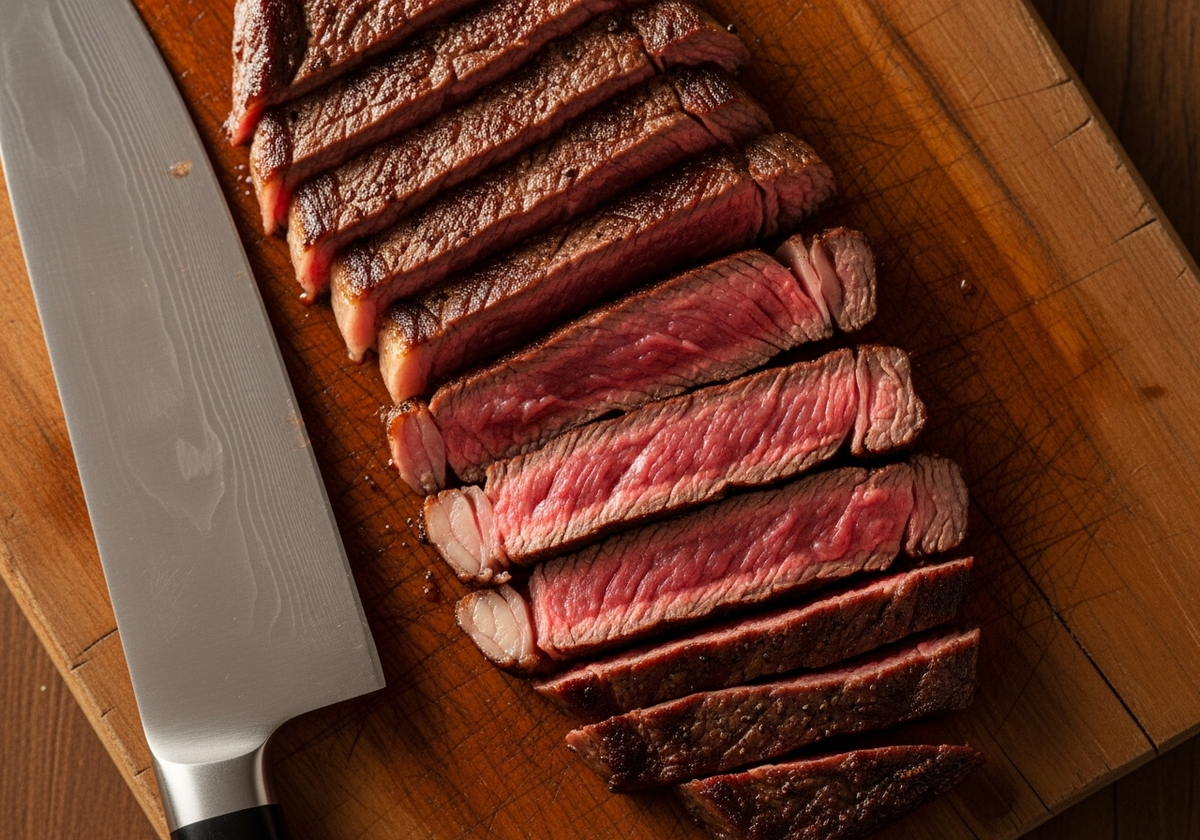

You can cook the most flavorful steak, brisket, or roast, but if you slice it wrong, you can ruin the texture in seconds. The secret lies in something most home cooks overlook: the grain of the meat. Understanding the grain and cutting against it can turn tough, chewy bites into tender, juicy perfection.
Understanding Meat Grain

What is the Grain in Meat?
The “grain” refers to the direction of the muscle fibers running through a cut of meat. These fibers are what give meat its structure. If you look closely at raw or cooked meat, you will notice fine lines running in one direction. Those lines are the grain.
Just like strands of spaghetti, these fibers can be long and chewy if you leave them whole, or shorter and more tender if you cut them down.
How the Grain Affects Texture
When you slice with the grain, you leave the muscle fibers intact, forcing your teeth to work through long, tough strands. Slicing against the grain shortens those fibers, making each bite tender and easier to chew. It is a small change in knife direction that makes a huge difference in mouthfeel.
How to Identify the Grain Before Slicing

Look for the Muscle Fiber Direction
Before you slice, examine the meat for visible lines or “strands.” These lines show you the fiber direction. Once you find it, you want your knife to cut perpendicular to those lines.
Grain can be easier to see in raw meat, but with practice, you will be able to spot it in cooked cuts as well.
Common Grain Patterns in Popular Cuts
-
Steak: Flank and skirt steaks have very defined grain lines, while ribeye’s are subtler.
-
Brisket: The flat and point muscles have different grain directions, so pay attention when slicing each.
-
Poultry: Chicken breasts have straight, clear fibers, while thighs can be more irregular.
-
Pork: Tenderloin has fine, straight grain, while pork shoulder’s grain can run in multiple directions.
Slicing Against the Grain for Maximum Tenderness
Step-by-Step Cutting Process
-
Rest the Meat: Letting it rest helps retain juices and relax fibers.
-
Identify the Grain: Look for the muscle fiber direction before placing your knife.
-
Rotate the Meat: Position it so your knife is perpendicular to the grain.
-
Slice Thinly and Evenly: This keeps fibers short and each bite consistently tender.
Real-Life Examples
Side-by-side comparisons show the difference clearly. Slices cut with the grain look stringy and can be tough, while slices cut against the grain appear shorter-fibered and tender. Once you taste the difference, you will never go back.
Locking In Tenderness from Cook to Slice

Even if you slice correctly, overcooking can still leave meat chewy. Use a meat thermometer to hit the right internal temperature and let the meat rest before cutting. This combination of precise cooking and grain-aware slicing will give you the best texture possible. By shortening the muscle fibers, you unlock tenderness and elevate the eating experience. Try this technique in your next cook, and you will notice the difference from the very first bite. Learn more about The MeatStick here.
Frequently Asked Questions (FAQ)
What does “against the grain” mean when cutting meat?
It means slicing perpendicular to the direction of the muscle fibers, shortening them for a more tender bite.
Can slicing against the grain make any cut tender?
It significantly improves texture in most cuts, especially tougher ones, but cooking and resting properly are still essential.
Is grain direction visible on all types of meat?
Yes, but it may be more subtle in tender cuts or after cooking.
Should I rest meat before slicing against the grain?
Absolutely. Resting helps retain juices and relax fibers, improving tenderness.
Does slicing angle matter as much as grain direction?
Grain direction is the priority, but slicing at a slight bias can make pieces even more tender.
Cook it to the number.

V Prime Set
Reads the coldest point in the meat, so you take it off the heat at the number on this chart.
Free shipping on this set
See the V Prime SetGreat Steak Guarantee: a great steak, or we buy it back. Terms
 Where to Probe Brisket: A Guide to Tracking the Internal Temp Like a Pro
 How to Keep Meat Juicy and Tender on the Grill: Science-Backed BBQ Tips for Perfect Results
 Why Marbling Matters for Flavor and Tenderness: The Secret to Perfect Meat Every Time
