

How to Cook Big Cuts Like Rib Roasts, Pork Loin, and Brisket Perfectly
Master cooking large cuts of meat with confidence. From rib roasts to pork loin and brisket, learn proper internal temps, roast timing, and how a smart wireless meat thermometer can help you achieve perfectly tender results every time.
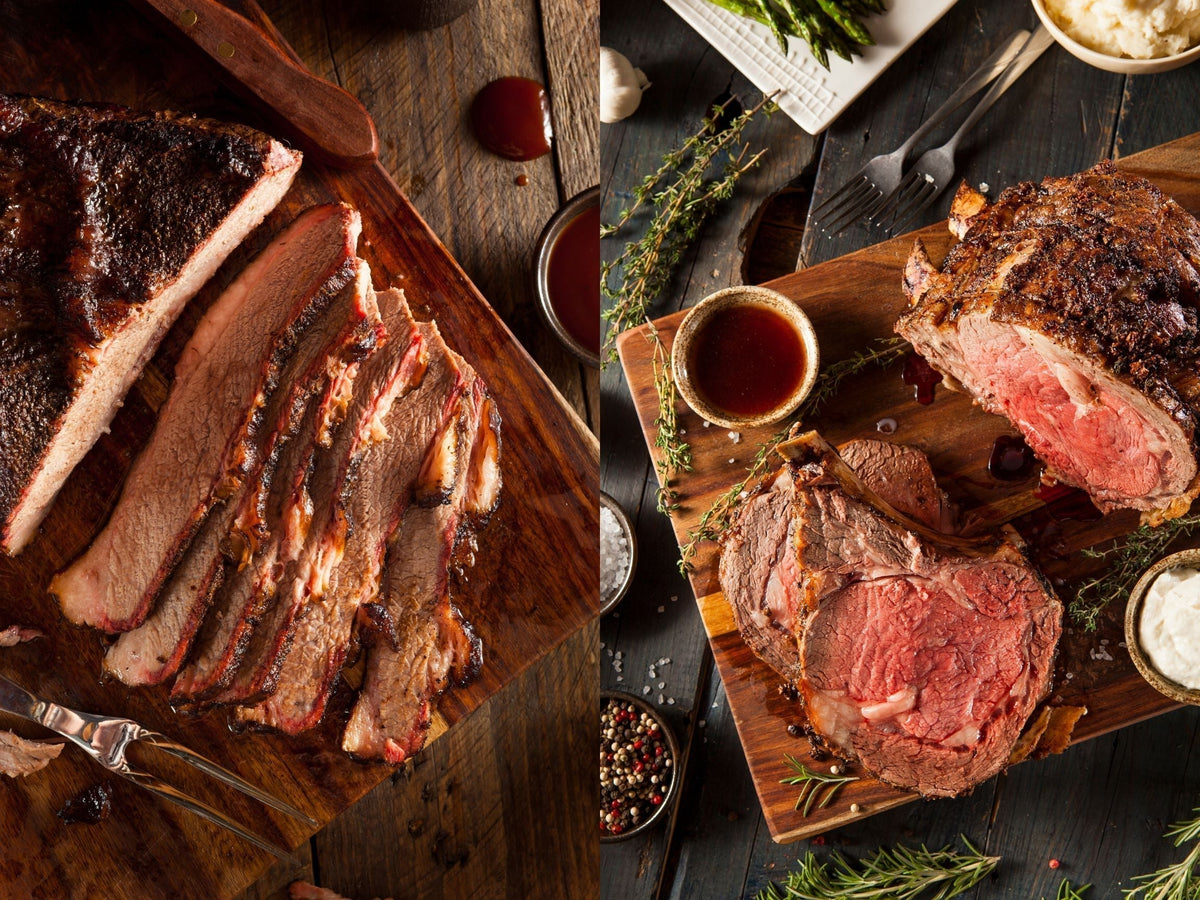
Cooking big cuts of meat is intimidating for a reason. Rib roasts, pork loin, and brisket cost more, take longer, and leave very little room for error. When something goes wrong, it usually goes very wrong. Dry rib roast. Chalky pork. Tough brisket after an all-day cook.
The good news is that big cuts are not difficult. They are just unforgiving if you cook them the same way you treat steaks or chops. Once you understand what actually causes failure and how to control it, big cuts become predictable and repeatable.
This guide focuses on the fundamentals that matter most: big cuts temps, realistic roast timing, and how to achieve true brisket tenderness using proper temperature control and smart wireless meat thermometer habits.

The Three Main Problems With Cooking Big Cuts
Before getting into specific meats, it is critical to understand why big cuts fail in the first place:
1. Uneven Heat Penetration
Big cuts heat from the outside inward. The exterior reaches high temperatures long before the center catches up. Without tracking internal temperature, the outside overcooks while the middle is still underdone.
2. Overreliance on Time
Minutes per pound charts ignore thickness, shape, fat content, bone structure, and airflow. Roast timing based only on time leads to rushed finishes or unnecessary heat increases, both of which damage texture.
3. Poor Carryover and Rest Management
Large cuts retain heat. Internal temperature continues rising after the meat is removed from the heat source. If you pull too late or slice too soon, moisture loss is guaranteed.
Every successful big cut cook solves all three problems at the same time.
What Actually Works Instead
The solution is simple but non-negotiable.
✅ You cook big cuts by internal temperature, not time.
✅ You pull early and plan for carryover cooking.
✅ You rest long enough for juices to redistribute.
This is where smart wireless meat thermometers make a real difference. Continuous internal monitoring allows you to manage heat progression without opening ovens or smokers and losing temperature stability.
With that foundation in place, here is how to handle each major cut correctly.
Rib Roast: Rich, Juicy, and Evenly Cooked
Rib roast is forgiving in flavor but unforgiving in moisture loss if overcooked. The goal is an even interior with minimal gray banding and a rich, juicy center.

Photo by @thenickepiscopo
Target Internal Temperature and Doneness Guide
For rib roast, the final internal temperature target is what defines doneness. The key is pulling the roast early and letting carryover cooking finish the job.
Always pull the roast 5 to 7°F before your target temperature.
Chef-recommended internal temperatures:
• Rare: 120-125°F
• Medium rare: 125-130°F
USDA-safe internal temperatures:
• Medium: 145°F
• Medium Well: 155°F
• Well-Done: 165°F
Because rib roast is thick and heats unevenly, the center reaches temperature long after the exterior. A smart wireless meat thermometer helps monitor how temperature progresses from the center outward, allowing you to pull at the correct moment instead of guessing.
This approach prevents the outside from overcooking while the center catches up and dramatically reduces gray banding, ensuring a juicy, evenly cooked roast.
Key Tips to Prevent Rib Roast From Drying Out
Cook low and slow
Set your oven or grill to 225 to 250°F. Lower heat reduces the temperature gap between the exterior and center, minimizing gray banding. Toward the end of cooking, raise the temperature to 450°F for 5-10 minutes to give the roast a golden-brown crust. This final sear enhances flavor and appearance, and it also adds a few degrees of carryover cooking. If you only cook at 225-250°F, carryover will be minimal, so this step ensures the exterior and crust finish perfectly.
Pull early and rest long
Large rib roasts can rise 5 to 7°F during rest. Rest loosely tented with foil for at least 30 minutes to allow juices to redistribute and carryover cooking to finish evenly.
Avoid repeated oven checks
Opening the oven drops ambient temperature and extends cooking time. A smart wireless meat thermometer allows you to monitor progress continuously without disturbing the cook.
Pork Loin: Juicy, Not Chalky
Pork loin is lean and unforgiving. It contains very little internal fat, which means moisture loss happens quickly once it passes its target temperature. Most pork loin failures occur in the final stage of cooking, when internal temperature rises rapidly and overshoots before the cook realizes it.

Photos by @saucedbossbbq
Target Internal Temperature and Doneness Guide
Pork loin quality depends on how precisely you hit your final temperature and how early you pull for carryover cooking. Final internal temperature targets:
• Medium: 145°F
• Medium Well: 155°F
• Well-Done: 165°F
Always pull the pork loin 5 to 7°F before your target temperature and allow carryover cooking to finish the cook during rest.
While pork loin can be safely cooked to higher temperatures, moisture loss increases as temperature rises. This makes accurate monitoring especially important, regardless of doneness preference.
Key Tips to Keep Pork Loin Tender
Control the finish carefully
Pork loin temperature rises quickly near the end of the cook. A smart wireless meat thermometer helps you track that final climb in real time and avoid overshooting your target.
Do not rely on time alone
Thickness and shape matter more than weight. Cook to internal temperature, not minutes per pound.
Rest briefly but deliberately
Rest pork loin for 10 to 15 minutes before slicing. This allows juices to redistribute without pushing the meat past its final target temperature.
Insert the probe correctly
Place the probe in the thickest part of the loin, avoiding fat caps and pan contact. Proper placement ensures accurate readings and consistent results.
Brisket: Cooking for Tenderness, Not Just Doneness
Brisket is a different challenge entirely. It is not done when it is safe. It is done when collagen has fully broken down into gelatin, which requires time spent at elevated internal temperatures.

Photos by @deltawhiskyphoto
Brisket Temperature Ranges That Matter
There are two critical phases during a brisket cook:
• Stall phase: 150 to 170°F
The stall is normal. Moisture evaporating from the surface cools the meat and slows the internal temperature rise. During this phase, the muscle fibers are still tight, and very little collagen has broken down. Patience is essential, rushing through the stall by increasing heat can make the brisket tough. The exact temperature range and duration of the stall depend on the size of the brisket, fat content, and smoker conditions.
• Collagen breakdown phase: above 170°F (usually around 170 to 205°F)
Once the internal temperature passes 170°F, connective tissue begins converting into gelatin. This process continues until about 205°F, depending on the cut (flat vs point) and size. This is what makes brisket tender and sliceable. The conversion accelerates at higher temperatures but takes time, even at 225-250°F, patience is key.
Brisket Internal Temperature Targets by Style
Brisket doneness depends on how you plan to serve it,
For sliced brisket: 200-203°F
For pulled or shredded brisket: 205-210°F
Resting is critical. Brisket should never be sliced or pulled immediately after removal from the heat. Resting allows gelatin to set and juices to redistribute, resulting in tender, sliceable meat.
Because brisket requires full collagen breakdown, you should cook it fully to its target temperature rather than pulling early like you do with rib roast or pork loin. Monitoring with a smart wireless meat thermometer ensures the temperature rises steadily and the meat stays in the optimal tender zone throughout the cook.
Brisket tenderness is achieved through controlled heat, patience, and uninterrupted monitoring.
Key Tips for Tender Brisket
Do not rush the stall
Cranking heat too aggressively tightens muscle fibers and delays collagen breakdown. Let the brisket move through the stall naturally.
Maintain stable ambient temperature
Keep smoker temperature steady between 225 and 250°F. Fluctuations slow collagen conversion and affect texture. A smart wireless meat thermometer allows you to monitor both internal and ambient temperatures without lifting the lid.
Rest longer than you think
Rest brisket for at least one hour, preferably wrapped and held warm. During rest, internal temperature drops into the ideal range for slicing or pulling while texture improves significantly.
Cook Big Cuts With Confidence, Not Guesswork

Smart wireless meat thermometers make big cuts predictable by tracking internal temperature continuously from the moment the meat goes on the heat. Instead of guessing based on time, you can see exactly how the cook is progressing and manage carryover cooking with precision.
For cooks who regularly handle large roasts, pork loin, and brisket, The MeatStick is a practical example of this approach. Its fully wireless design and multi-sensor tracking allow you to monitor temperature changes deep inside the meat throughout long cooks, without opening the oven or smoker and disrupting heat.
The result is fewer surprises, better timing, and consistent results on cuts where mistakes are expensive.
FAQ (Frequently Asked Questions)
Why do big cuts like rib roast, pork loin, and brisket often fail?
Big cuts fail mainly because of uneven heat penetration, overreliance on time, and poor carryover and rest management. The outside heats faster than the center, timing charts ignore thickness and shape, and internal temperature continues rising after removal if the meat is pulled too late.
What is the best way to cook rib roast without overcooking the outside?
Pull the rib roast 5-7°F before your final internal temperature to let carryover cooking finish the roast. Chef-recommended temps: Rare 120-125°F, Medium rare 125-130°F. USDA-safe temps: Medium 145°F, Medium well 155°F, Well-done 165°F.
How can I keep pork loin juicy and avoid it turning chalky?
Use a smart wireless meat thermometer to monitor temperature, pull 5 to 7°F below the target (145°F for medium, 155°F for medium well, 165°F for well-done), cook to internal temperature instead of relying on time, and rest for 10 to 15 minutes before slicing. Proper probe placement in the thickest part is also critical.
What internal temperatures should I aim for when cooking brisket?
For sliced brisket, aim for about 185°F after resting. For pulled or shredded brisket, target around 203°F. Always rest brisket after cooking to allow collagen to set and juices to redistribute.
How does a smart wireless meat thermometer help with big cuts?
It continuously monitors internal temperature from raw to finish, tracks heat progression without opening the oven or smoker, and helps manage carryover cooking. This reduces guesswork and ensures more consistent, tender results for rib roasts, pork loin, and brisket.
Cook it to the number.

V Prime Set
Reads the coldest point in the meat, so you take it off the heat at the number on this chart.
Free shipping on this set
See the V Prime SetGreat Steak Guarantee: a great steak, or we buy it back. Terms
 The Science of Tender Meat: Why Temperature Is the Secret to a Perfect Date Night Meal
 Why Prime Rib Goes Wrong and How to Fix It
 How to Cook Perfect Corned Beef: Temps, Timing, and Tenderness